

Precision Adjust ELITE Knife Sharpener
SKU: WSBCHPAJ-ELT


Couldn't load pickup availability
Ideal for Sharpening:
 Hunt
Hunt
 Kitchen
 Pocket
 Serrations
Fishing
Serrations
Fishing
 Scissors
 Axes and Tools
Hunt & Fish
Kitchen
Pocket
Serrations
Scissors
Axes and Tools
Axes and Tools
Hunt & Fish
Kitchen
Pocket
Serrations
Scissors
Axes and Tools
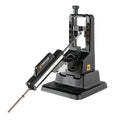
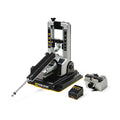
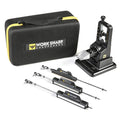
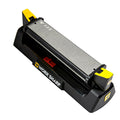
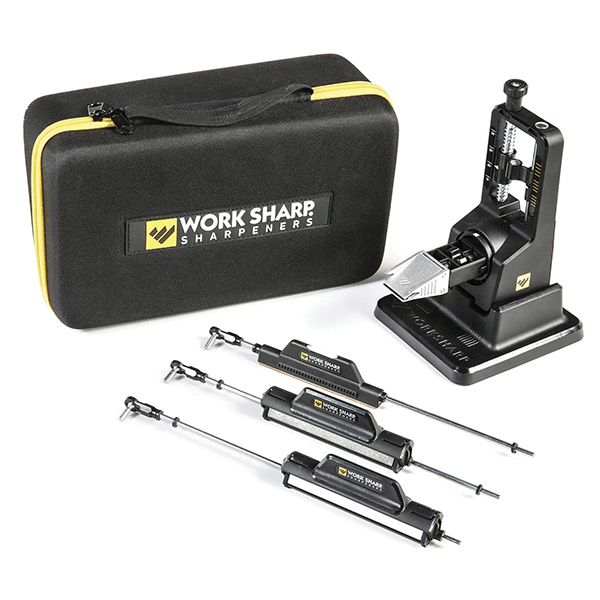
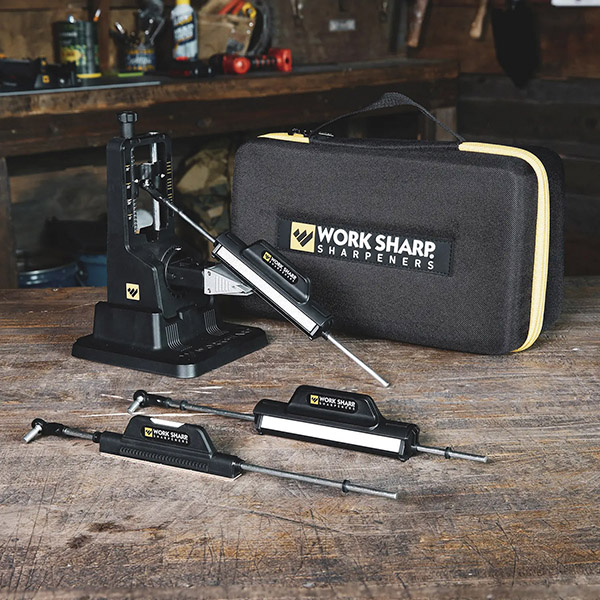
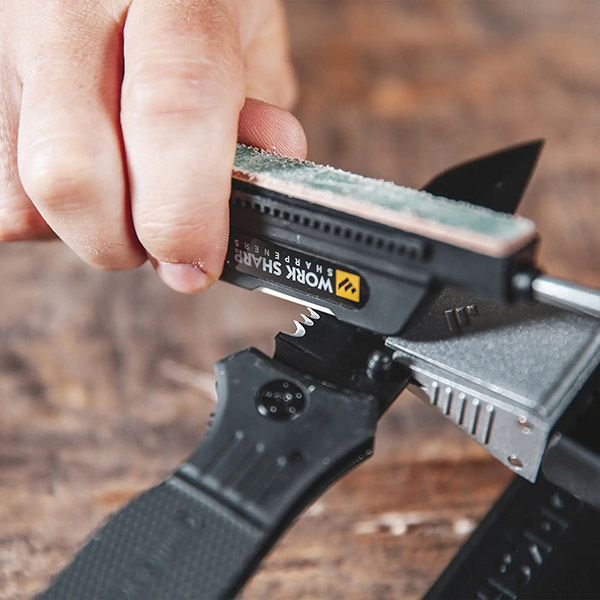
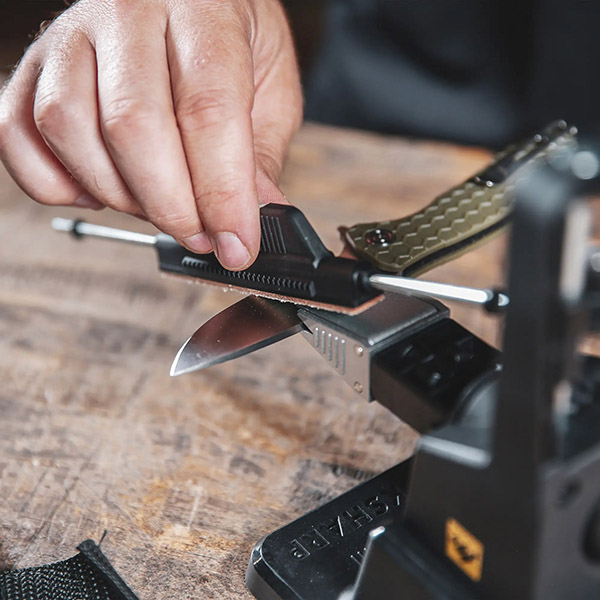
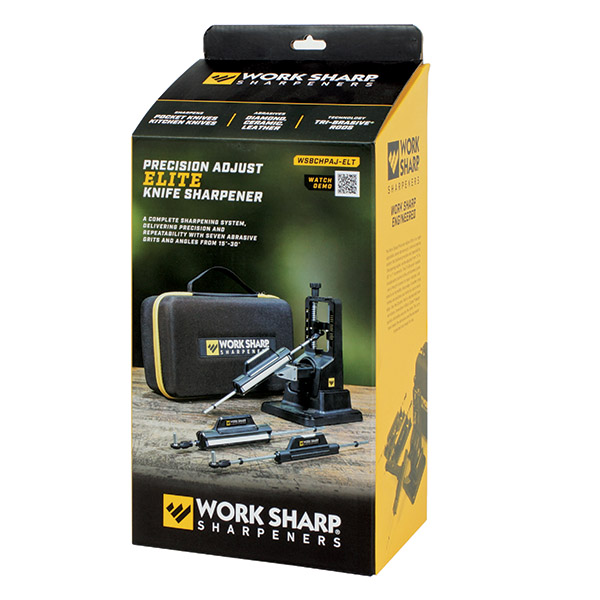
This Elite fixed-angle knife sharpener offers angle adjustability and a seven-abrasive grit system, ensuring precision and repeatability. With adjustable angles from 15° to 30° in precise 1° increments, it accommodates a wide range of knives. Two Tri-Brasive® sharpening stones provide five diamond grit plates and a fine ceramic stone for repair, sharpening, and honing to a razor-sharp edge. The included leather strop adds the finishing touch, refining and polishing to scary sharp results. Featuring the innovative V-Block Clamp design, it securely holds knives during sharpening. The included carry case and Tri-Brasive® storage rack keep everything organized for on-the-go sharpening.
In Stock, Ready to ship
View full details


Features
Tri-Brasive® Sharpening Handles
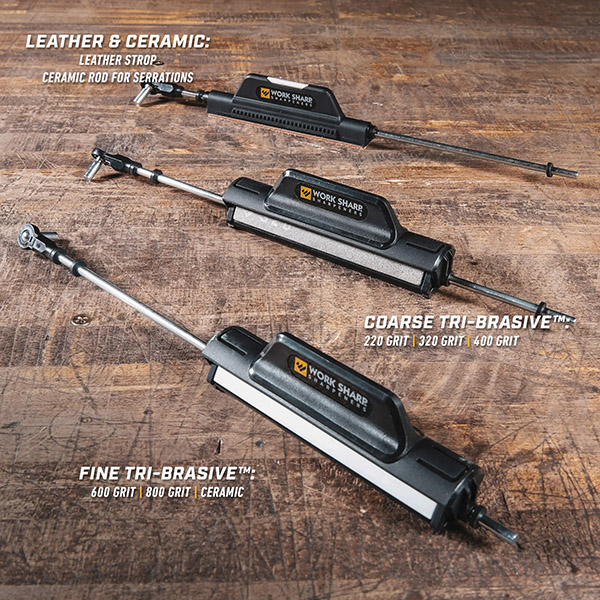
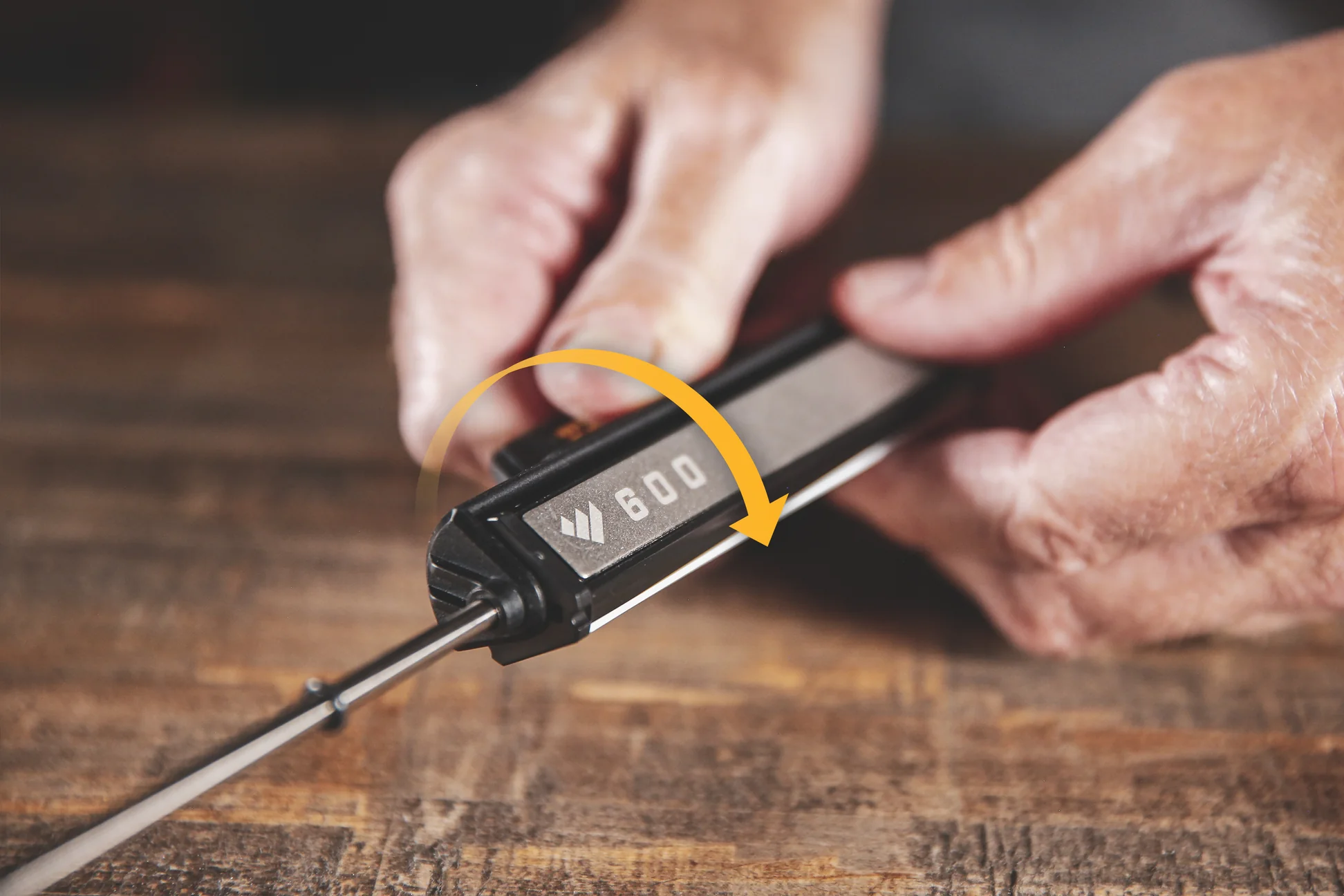
Two rotating handles provide five diamond grit plates (220–800 grit) and a fine ceramic stone. Rotate through grits instantly — faster, easier sharpening from coarse repair to a refined, razor-sharp edge.
Angle Setting Dial
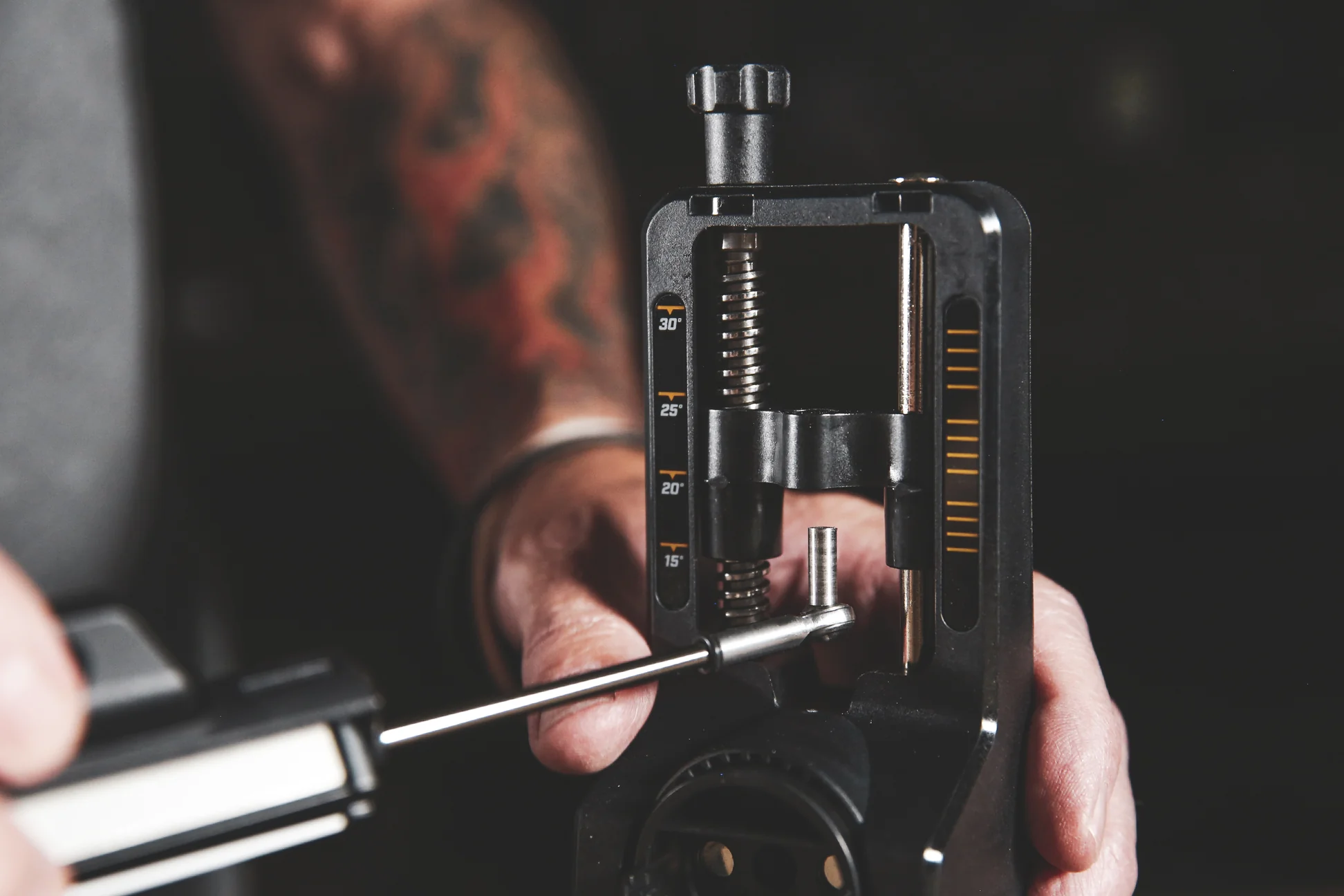
Dial in any angle from 15° to 30° in precise 1° increments. Lock it in and return to the same setting every time — consistent, repeatable results on every knife you own.
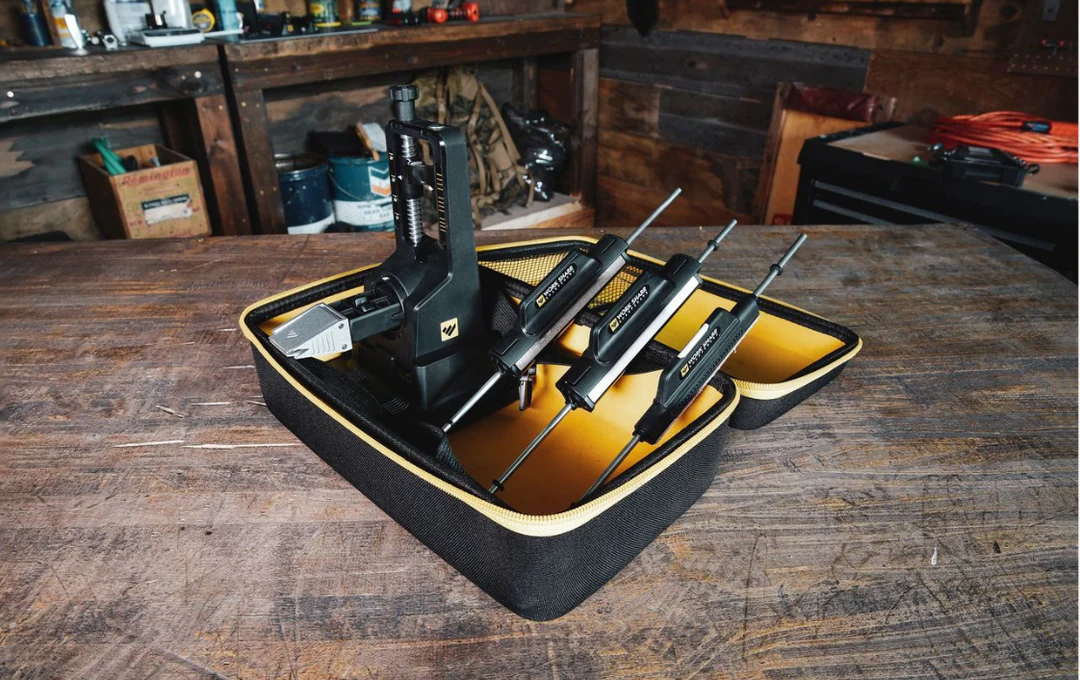
Expanded Features Included
More grits, a leather strop, a ceramic serration rod, a carry case, and a Tri-Brasive® storage rack — everything organised and ready to go, whether at the bench or on the road.
Specifications
Customer Reviews
A lot longer learning curve and a lot slower than anticipated. Small narrow 'stones' have tendencies to roll especially using the top blade handle. Am able to eventually get very satisfactory paper cutting knifes it is a long haul getting there. Strop is woefully inadequate. Button for rotation came extremely hard to push then quit. After a round of emails with wonderful tech support I have it under control. Overall because of age 80 weaknesses of eyes and hand eye coordination I can't handle traditional sharpening stones so this system saved the day for my wife's kitchen knives...but in for a long haul getting them all in shape. About one a day..
Nice little sharpener, works very well. I watched a couple of videos to help get started. Suggestions for improvement: The part that actually grabs the knife could hold a little better, big knives can move when sharpening. Also, the button to flip the knife over can be a bit difficult. Overall, an excellent sharpener.
I picked mine up from SMKW, and first impressions right out of the box are that it feels a lot heavier and more sturdy than I anticipated after watching several reviews. It feels substantial enough to be a long lasting system, especially for the price point it came in at. I can’t wait to get some sharpening time in on this thing. I’ve owned similar systems, like the KME, and this thing honestly feels like a more streamlined and polished KME without having to spend close to $400 just to get a controlled angle sharpening system. These dudes tapped into something special and affordable here. Sharp knives should be something everyone has access to; not just those with deep pockets. Thanks Worksharp!
Sharpened several pocket knives as soon as I received the kit. Works great! With very little effort the edges are crisp and VERY sharp. Happy with purchase, would absolutely recommend. Beginner could use if directions are closely followed.
This sharpener is absolutely awesome! The new edge on my knife is so perfectly smooth- polished even and my knife has never been sharper. Love that I can actually sharpen all the way to the heel, and the V block holder works great (I was worried about it until I clamped my first blade in- works perfectly. The case is absolutely great. Cudos to all involved in this system.
Was always nervous to sharpen more expensive kitchen knives for fear of ruining them. This kit made it easy to bring them back to life. Go slow, take your time, and you will be thrilled with the results.
Great customer care and great products
I’ve used a Smith guided sharpener for years but always felt it was lacking. I can’t hold an angle to save my life with whetstones so I broke down & bought this unit. I started with the basic kit which did well & then my wife got me the upgrade kit for Christmas & holy he11 will this thing put an edge on a knife. I EDC a Kershaw & keep it at 15 degrees because I like a keen edge but this system put a WICKED edge on it. I went from slicing paper to what paper? in 320 strokes (yes I counted). Working from 220 up to the strop turned a knife into a razor. My only complaint is now I have to sharpen all of my wife’s knives so they’re on par with my pocket knife
I got the Elite Sharpening System, then went into my daughter's kitchen and grabbed 2 "known to be dull" Knives. My son in law caught me sharpening the knives. I put the knives back and waited. My son in law isn't impressed easily but he said wow this knife has never been this sharp before!! I guess that says it all. We all are impressed!! Big time!
Perfect for all my different knifes , Thank you!
Solid product. Set angles keep me where I need to be.
Prefect for a bench top sharpener . Allows me to get the angle precise across the whole cutting edge ! Would highly recommend!!
got the prcision adjust elite great sharpener easy setup works great ,love the assortment of stones
First off this product does an excellent job. I have used this product for almost 3 years. The last time I went to use, I found that the magnet that holds the sharpening stone in place has fallen out. I called customer service and within days I received a complete tower. Excellent product excellent customer service. Thank you Work Sharp.
Ordered and used put a razor edge on my Spyderco in just a few minutes love it
I've been a long time Wicked Edge user. My unit was one of the first released and began to get a little janky with age so I was looking for some alternative systems. Enter the Work Sharp Precision Adjust (Elite) -- This is a much simpler system compared to the WEPS and delivered a sharper edge than I've been able to achieve before. Props to the Work Sharp team, now I just need to stop eyeballing the nicer systems......
This worked so well! I can’t recommend it enough!
This system is amazing! The only things i would change are
1. wider or heavier base to you dont have to use your off hand to stabalize.
2. directional arrows to indicate the rotation
3. the button on the back can be a bit hard to press in for someone that has an injury (like myself) or is older
4. the stroke of the sharpening stone stops early. So ive had a worn stone with about 1/2"-3/4" of new untouched stone on the end. Possibly make the stones rotatable so that you can use the entire stone before having to replace?
5. There is no way to lock your angle into place. When new, it does not drift much, but after a year of using it, the wormdrive use to adjust the angle gets a bit loose and if you dont keep an eye on it, you can mess up your angle pretty drastically.
Overall this is an amazing set up. Ive used all the electric systems, roller systems and wetstones.
This is so nice to set your angle and not have to worry about holding your hand just right.
If you are looking for a solid system that doesnt break the bank, this is the ticket. Get the extra sharpening arms. they make all the difference.
Cant wait to upgrade to the pro package. It seems to have a lot of corrections on it.
For medium to chef knives it works great. I have sharpened and touched up a lot of knives in the last couple of years since I have owned this sharpener. In the end I can literally shave with each one. You just need to take your time, keep rotating the knife every few strokes. It's not a mechanical sharpener, it's manual, so be patient. In the end you will be very happy with the results. The only drawbacks that I feel are worth mentioning, it doesn't have a digital angle finder or the small knife attachment. As far as mechanics, yes there is a tiny bit of play here and there. Not enough that you can not get a razor sharp edge.
This product is easy to use and sharpens dull edges to razor sharp.
Just started using the Precision Adjust Elite. It is great! Very easy to setup and use. I have sharpened my everyday carry and serrated steak knives. Super sharp and consistent edge. Borrowed my knife to my buddy this past weekend and he commented on the nice edge it had. So yeah this sharpener is the real deal, love it.
I have been sharpening all my knives since my Precision Adjust Elite arrived. It has taken quite a a bit of time because my knives were in such bad shape (despite my attempting to keep them sharp with other stones and sharpening tools). I am about halfway done and every one is sharp enough to slice paper and shave. I think that future efforts will be much faster once the edges are sharpened properly.
It would be nice if the knife holder was a bit more secure when sharpening dull knives. That would allow a little faster sharpening with the coarse stone
Well built unit that allows precise sharpening of knives of all sizes. I was able to sharpen my knives very soon after reviewing the videos and reading the instructions. At times I put a bit too much pressure on the arm and the knife would flex in the clamp but this wasn't too catastrophic because I think the angle change is compensated for by the design of the arm. A word of warning to new users.... Be careful only to slide the leather strop towards you. I managed to slice through mine the very first time I used it.
I’ve always used wet stones or steel . Not no more. After getting an easy razor sharp edge on my kershaw pocket knife, I’m hooked! Take your time read the instructions, watch the videos, this thing works!
Sharpened a whole of kitchen in knives thet were very dull to better than new in one sitting. Great control, tou can watch the resurfacing as you step thru the grit levels.
Seems to work really well.
I love how easy this is to use and it does a very nice job! Knives are so much sharper than when it came from the factory! Good price for good product!
Just finished sharpening all of my kitchen knives. Previously I used a Miyabi Sharpening stone but could not get the razor sharp finish I now have. Very easy to use and the whole package is a joy to use. Mu only negative (is that the push button to rotate the knife is virtually unusable. It requires a very very strong push to indent, so much so I could not use. I have to remove clamp and turn manually. (hence the 4 stars as opposed to 5 stars!) I sharpened my Miyabi 5000 series knives and pretty good first time. I then repeated the process (minus the shaping) a few days later, and now even better. It takes time but well worth the extra effort. Shaves my hand very well!!!!!.
I've tried sharpening knives for years on a flat stone and just could never get it done right. Just bought the Precision Adjust Elite Knife Sharpener and absolutely love it. Out of the box easy set up and sharpened about 15 knives I have along with all of my wifes kitchen knives... Very user friendly and sharp as hell with ease. Thanks so much!
Easy to set up. Easy to use! My kitchen knives are finally sharp!